The Control Surface: How Discreet Airport Assistance Protects the Value of Time
For global executives and private travelers, premium airport service is not simply about moving faster. It is about coordinating the critical transitions around a journey so that time, privacy, and attention remain under control.
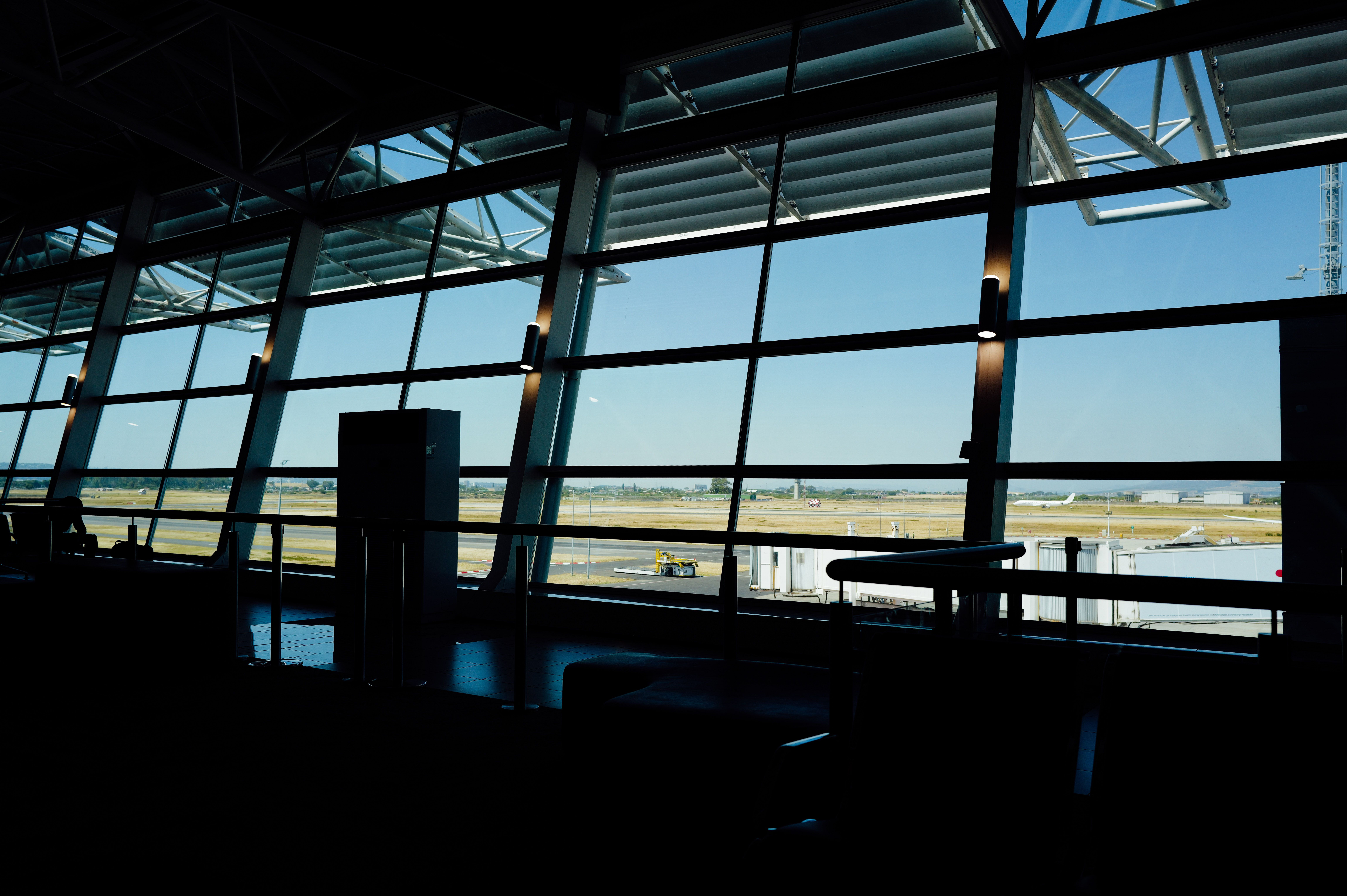
For global executives, family offices, and private travelers, the airport is rarely just a place between two destinations. It is a concentrated operating environment: identification, baggage, security, border formalities, transfers, gate changes, and the possibility of delay all meet within a narrow window. The visible journey may last only a few hours, but the quality of those hours can influence the meeting that follows, the decision that must be made, or the recovery that a long itinerary requires.
That is why the most useful way to understand premium airport assistance is not as a shortcut, and not as a display of privilege. It is as a control surface for travel: a discreet layer of human coordination and digital readiness that reduces avoidable friction while respecting the rules, procedures, and local limitations of each airport.
The airport is a sequence of dependencies
A conventional airport journey is often described as a series of simple steps. In practice, each step depends on the one before it. A delayed arrival can compress a connection. A missing bag can change the transfer plan. An unfamiliar terminal can add distance at exactly the wrong moment. A change in border procedure can create uncertainty for a traveler who has already spent hours in transit.
Public descriptions of airport concierge services commonly include meet-and-greet support, luggage assistance, airport navigation, expedited lanes where available, and help across arrival, departure, or connection journeys. These services are not identical at every airport, and access is always shaped by local regulations, airline arrangements, operating hours, and the traveler's itinerary. The important point is the operating principle: premium assistance creates continuity between separate touchpoints.
For a senior traveler, continuity has measurable value even when it is not expressed as a number. It can mean knowing where the next handoff will happen, having the right person identify the traveler at the right time, and avoiding the cognitive load of solving routine logistical questions while attention is needed elsewhere.
From visible luxury to invisible precision
Traditional luxury often announces itself through materials, space, and ceremony. In an airport, however, the strongest form of luxury can be nearly invisible. It appears as a well-timed arrival greeting, a clear route through a complex terminal, a properly coordinated luggage movement, or a lounge transition that does not require the traveler to repeat the same information several times.
This is a different standard from simply adding amenities. A lounge, private vehicle, or dedicated suite can improve comfort, but comfort becomes meaningful only when it is connected to the wider itinerary. Public comparisons of VIP airport products show a familiar progression: basic meet-and-greet support; additional lounge or chauffeured transfer arrangements; and, at the highest tier, a private suite with dedicated staff and private aircraft-to-terminal movement.
That progression is useful, but it should not be mistaken for a universal template. The best service is the one that fits the journey rather than the one with the most impressive label.
At VERTU England, this distinction informs the role of the VIP Terminal Manager. The objective is not to make every passage look identical. It is to understand what the traveler needs the airport to protect: time, composure, discretion, comfort, or the ability to remain focused on a more important agenda.
Where intelligence belongs
The intelligent layer of a premium airport service should not compete with the human relationship. It should make that relationship more accurate. Before travel, digital coordination can organize flight details, passenger requirements, timing, service type, and destination-specific conditions.
During travel, operational updates can help the service team prepare for changed arrival times, connection windows, or meeting points. After travel, a clear record of preferences can make future journeys more consistent without requiring the traveler to start again from zero.
This is what AI enablement should mean in a premium context: not theatrical automation, but better preparation, better routing of information, and fewer unnecessary questions. It is an operational discipline in which technology supports judgment. The traveler should feel less technology, not more.
The principle also requires restraint. No digital system can guarantee a faster border crossing, override immigration authority, or remove every airport constraint. A responsible service must distinguish between what it can coordinate and what remains subject to government, airport, airline, or security controls.
The promise is therefore precise: discreet, fast, and comfortable border crossings where the relevant service is available and permitted, supported by careful planning rather than exaggerated certainty.
Three moments that define the experience
The quality of airport assistance is often decided in the transitions between formal service stages. The first is the moment of recognition: can the traveler identify the representative, and can the representative confirm the correct itinerary without creating a public scene? The second is the moment of movement: can the traveler move through the airport with a route that reflects the actual terminal and current conditions?
The third is the moment of handoff: can the traveler be transferred cleanly to a lounge, vehicle, airline desk, gate, or onward representative?
These moments are small, but they carry the character of the entire service. A polished experience is not defined by constant intervention. It is defined by the right intervention at the right time, followed by enough space for the traveler to remain private.
A useful service brief should therefore be built around the journey rather than the package name. The relevant questions are practical: Is the itinerary an arrival, departure, or connection? Is luggage assistance required? Is a lounge appropriate, or would direct transfer be better? Is the traveler carrying sensitive documents or traveling with family? Are there short connection windows, language considerations, or accessibility requirements that need to be discussed in advance?
| Journey requirement | Operational priority | Appropriate service intention |
|---|---|---|
| Arrival into an unfamiliar or complex airport | Recognition, navigation, baggage coordination | Reduce uncertainty after landing and preserve a composed onward transfer |
| Departure with a demanding schedule | Time planning, check-in support, security routing | Protect attention before the flight without promising access beyond local rules |
| International connection | Handoff accuracy, terminal movement, timing awareness | Keep the connection legible and reduce avoidable friction between flights |
| High-discretion travel | Low-visibility coordination, controlled communication | Offer support without turning assistance into a public performance |
A more mature definition of premium
The market increasingly presents VIP airport assistance as a combination of personal guidance, baggage handling, fast-track support, lounge access, and private transfers. Independent travel coverage likewise notes that these services can be valuable to travelers who place a premium on time, privacy, or reducing the obstacles of the airport experience, while emphasizing that availability and pricing vary by location and service level.
For VERTU, the more mature interpretation is not to compete on the loudest promise. It is to treat the airport as part of a broader private-service ecosystem. The airport passage should connect naturally with private aviation, executive travel, hospitality, ground transportation, and the wider expectations of a global life. That requires the service team to think in terms of context, not isolated transactions.
The result is a quieter form of distinction. The traveler does not need to be impressed by the infrastructure behind the experience. They need to feel that the journey has been understood, that the critical transitions are being watched, and that their time has been treated as a scarce and valuable resource.
The VERTU standard
Global Top Private Airport Services and VIP Channels is positioned as a VERTU intelligent operations and AI enablement service for clients seeking discreet, fast, and comfortable border crossings. Its value is not limited to a premium terminal, a lounge, or a dedicated escort. Its value lies in the orchestration between them: the preparation before arrival, the judgment during movement, and the discretion that allows the traveler to continue with the purpose of the journey.
A premium airport experience should never feel like an additional task. It should feel like a well-managed interval in which the important things remain clear and the unnecessary things recede. That is the control surface VERTU England is designed to provide: not more noise around travel, but more confidence within it.